Single-Authored

April 2026
This book explores a twenty-year period in Canada’s history when there was no media regulation, and no mandate to promote Canadian culture. Through an examination of theatrical reviews, images, and textual records, Staging Blackface in Canada locates how the Canadian stage became a playground for ethnic jokes, racial caricature, and women’s emancipation. It locates some of the first Black musicals on Canadian stages.
April 2025
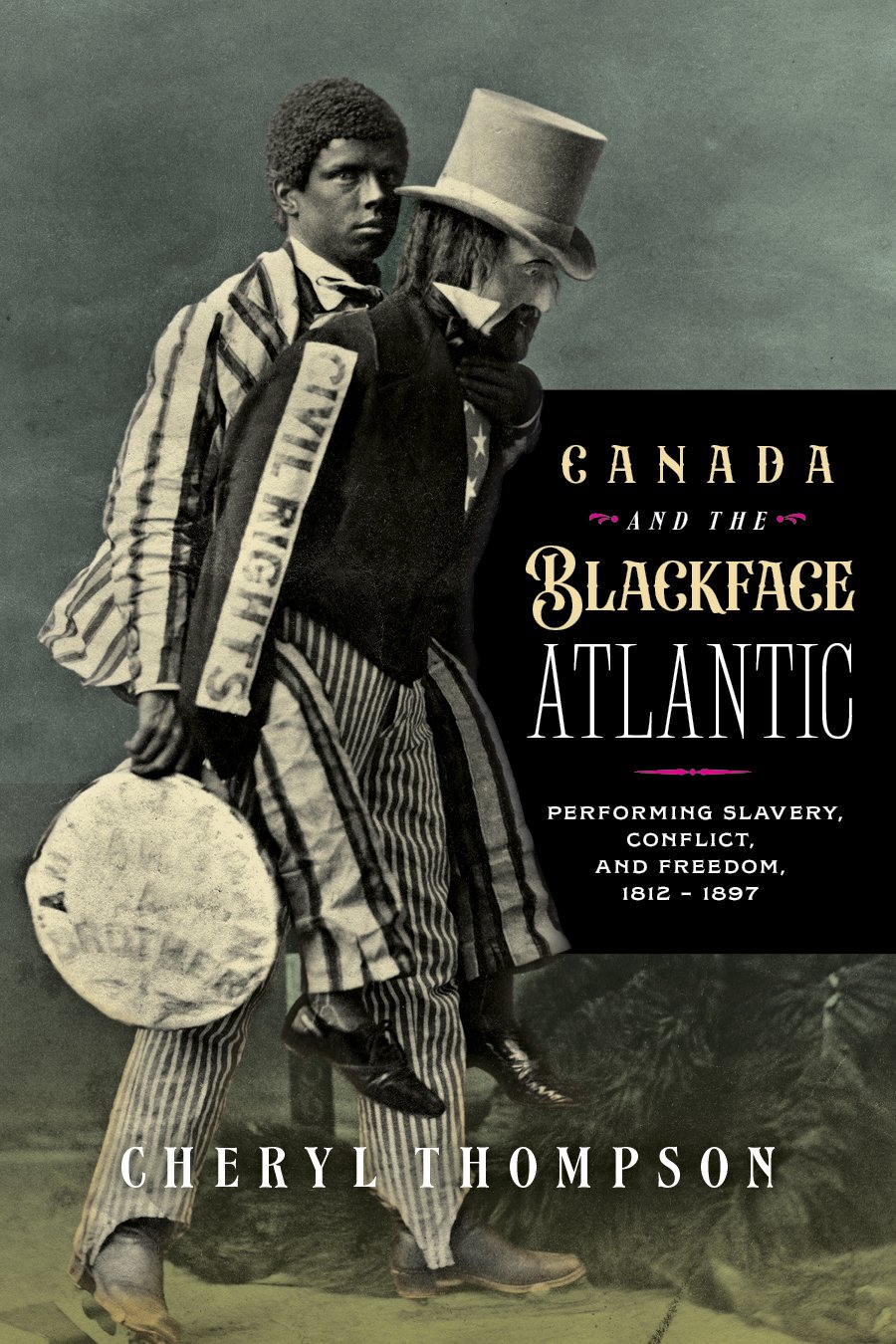
This book begins with the conflicts that shaped North America – the American Revolutionary War, and the War of 1812. Next, it connects these origins with eighteenth-century British immigration, which brought folk dances and masking traditions to North America. From there, it unmasks when and how “Jim Crow” became an Atlantic world sensation, which set the stage for blackface to expand. Commended CSN Best Book in Canadian Studies 2025
February 2021
Uncle traces Uncle Tom’s journey from literary character to racial trope. I explore how Uncle Tom came to be and exposes the relentless reworking of Uncle Tom into a nostalgic, racial metaphor with the power to shape how we see Black men, a distortion visible in everything from Uncle Ben and Rastus The Cream of Wheat chef to Shirley Temple and Bill “Bojangles” Robinson to Bill Cosby. This book explains the production of stereotypes.
April 2019
One of the first transnational, feminist studies of Canada’s black beauty culture and the role that media, retail, and consumers have played in its development, Beauty in a Box widens our understanding of the politics of black hair. The book analyzes advertisements and articles from media—newspapers, advertisements, television, and other sources—that focus on black communities in Halifax, Montreal, Toronto, and Calgary.
Co-Editor
August 2022
Creative Industries in Canada is a foundational text that encourages students to think critically about creative industries within a Canadian context and interrogate the current state and future possibilities of the industry. While much of current creative industries literature concerns the United Kingdom, the United States, and Asia, this text captures the breadth of how Canadian industries are organized and experienced, and how they operate.
Forthcoming

Anticipated, 2027
Rooted in my love of jazz, years spent living in Montreal, and archival research, this book aims to explain the disjuncture between the golden era of jazz in Montreal, and the contemporary Montreal International Jazz Festival. I seek to fill in the “missing middle” period of the 1960s through 1970s, which is an underrepresented time in Canadian jazz history, and more broadly, Black Canadian history.
Anticipated, 2028
As the follow up to Canada and the Blackface Atlantic and Staging Blackface in Canada, this book will explain the contradiction between Canada as “safe haven” and the centuries-long existence of blackface shows. I illuminate how longings for the American South was largely a response to twentieth-century demographic shifts, and demands for civil rights that challenged Canada’s image as a “white” nation.
Interviews and Excerpts
Reviews
“Thompson’s book makes clear that blackface was never just an American pastime; in the 19th century, it was a staple of Canadian popular culture. In a country that celebrated the Underground Railroad, Canadians romanticized the plantation South.”
“I wish I’d had a book like this one assigned to me during university. It would have broadened my knowledge of Canadian theatre, while raising my awareness of other consequential misrepresentations in literature, film, and television.”
“Uncle is a conceptually versatile discussion that is squarely situated in the evolution of an American text that has found its way into other national histories and geographies, as Thompson demonstrates with examples of Uncle that pop up in the U.K. and Canada and elsewhere. ”
“Thompson’s work is inspiring and it should, as she calls for in the conclusion, produce more work on Black Canadian beauty culture.”
“Dr. Cheryl Thompson ... has put together an in-depth and important body of research, one that concerns the history and evolution of the Canadian beauty industry.”